You built the shop. Somewhere along the way, the software started running you.
If you run an independent shop, you know the shape of it. The marketplace that sends you orders also keeps your customer, takes its cut, and sells the same buyer to the shop across town. The website runs on a pile of plugins that fight each other every time one updates. The card printer needs its own ritual. The delivery list lives on paper, the messages live in your personal phone, and the numbers live nowhere at all.
Your customers should be yours, not rented back to you at a fee.
Your evenings should not be spent retyping orders between systems that refuse to talk.
Your brand should not sit inside someone else’s storefront, dressed like everyone else.
The big chains solved this years ago with software teams and support armies. Independents were told to duct-tape something together and be grateful.
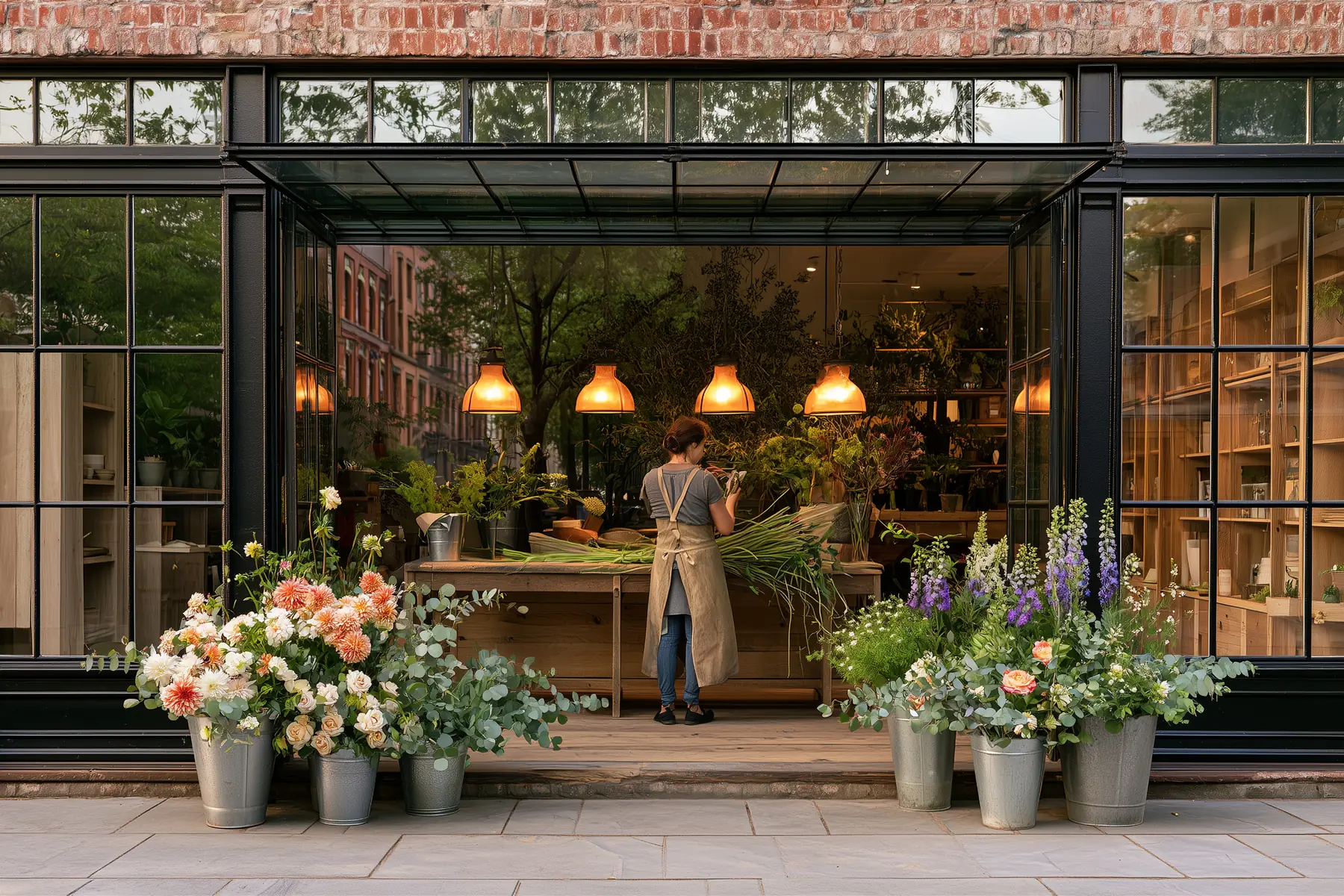
So we built it inside a real flower shop.
Trellis was not designed in a conference room. It was built inside a working luxury flower studio, order by order, delivery by delivery. Every screen earned its place on real mornings: the wedding rush, the printer jam at nine, the driver waiting on a route, a Mother’s Day week that would break most systems.
One system runs the whole shop. The storefront that lives at your own address rather than inside somebody else’s. Phone and walk-in orders on the same screen. Deliveries routed, drivers guided, proof photos sent. Cards printed. Every one of those is running today, in a working studio, and none of it is a mockup.
If it did not survive the shop, it did not ship. That is the whole method.
A trellis grows nothing by itself. It holds the structure so the living thing can climb.
That is what this software is for. Not another tool to learn, not another dashboard to check. Structure that holds, so the shop and the person who built it can grow.
More is coming, and the honest word for it today is testing. Work that takes the busywork off your evening and keeps your attention on the shop and the flowers, running inside a real studio while we make sure of it. We will say more about it when it has earned the saying.
Florists first, because that is where Trellis was born and where it still runs every day, in a real shop, on real orders.
Early shops onboard by conversation, not by signup form.
Start the conversationOne meter, not ten.
One percent of what you sell, and nothing else. No charge for extra people on your team. No charge per proposal, per photo, per ticket printed, per message sent. No cap on how many weddings you book. A busy shop uses more of everything, so a busy shop pays a little more, and that is the only meter we run. That one percent is the application fee, the platform’s share of a sale, and there is nothing else beside it.
Shop
- Your own storefront on your own address, not a page inside somebody else’s website
- Search built in: page titles, descriptions, sitemaps, clean links, and redirects that hold when something moves
- Phone and walk-in orders on the same screen as online ones
- Deliveries routed, drivers guided, proof photos sent
- Tickets, cards and envelopes printed
- Every message we send for you, logged with the time it went: the arrangement photo, out for delivery, delivered
- The delivery proof photo kept for 150 days, so when a customer’s bank asks who received what and when, you have the answer instead of losing the money
Events
- Proposals with no limit, ever, on how many you write or book
- One master sheet, and four printed versions: the couple, the designer, the setup crew, and yours
- Paste a wholesaler’s price sheet or a receipt, and your costs update themselves
- Every line carries what you quoted and what it actually cost
- What you expected to make, against what you actually made once the bills are in. A cost nobody has entered is never counted as zero, so the profit it shows you is the real one
- A payment schedule that holds the date: a deposit and up to two more, and it tells you the amount if the schedule does not add up to the bill
- Electronic signature on any device, in person or at home, recording who signed and when, with the studio told the moment it happens
- A library of what you have made, on shelves you name yourself
Everything
- Both of the above, in one system
- One catalogue, one cooler, one margin report the day you switch on
- A wedding and a Tuesday delivery drawing on the same flowers, counted once
Getting on the system: setup and onboarding is $399. It covers your storefront live, your products and photos in, your printers and your training. A full migration, where every address your customers already know is carried across so your search ranking survives the move, is $1,299. Most shops will not need it; a new shop, or one without much of a search presence yet, is on the system for $399.
Month to month is the default and you can leave whenever you like, on thirty days’ notice. Take the yearly instead and you get fourteen months for the price of twelve. If you say nothing at renewal it drops to month to month rather than locking you into another year.